December is a month of lights and excitement… and also of many doubts when it’s time to choose gifts. If there’s a child with visual difficulties close to you, whether perceptual, coordination or focusing difficulties, it’s natural to wonder which options can be fun and at the same time beneficial for their development.
At Enfoca’t we believe that playing is also training. And that, with the right materials, it’s possible to stimulate vision in a playful way, without pressure and respecting each child’s pace.
6 gift ideas that stimulate visual perception
1.-Construction and matching games
LEGO-type blocks, magnetic tiles or assembly games help improve spatial perception, hand–eye coordination and visual planning.
2.-“Search and find” books
Classics like “Where’s Wally?” or books with visual challenges help maintain attention, improve visual discrimination and train concentration.
3.-Games like “Rush Hour” or “IQ Puzzle”
They are excellent for working on spatial organization, solving visual problems and anticipating. They also encourage autonomy and confidence.
4.-Visual card games (Dobble, SET…)
They allow children to train visual speed, memory and the ability to spot small details. Plus, they’re ideal for playing with family or friends.
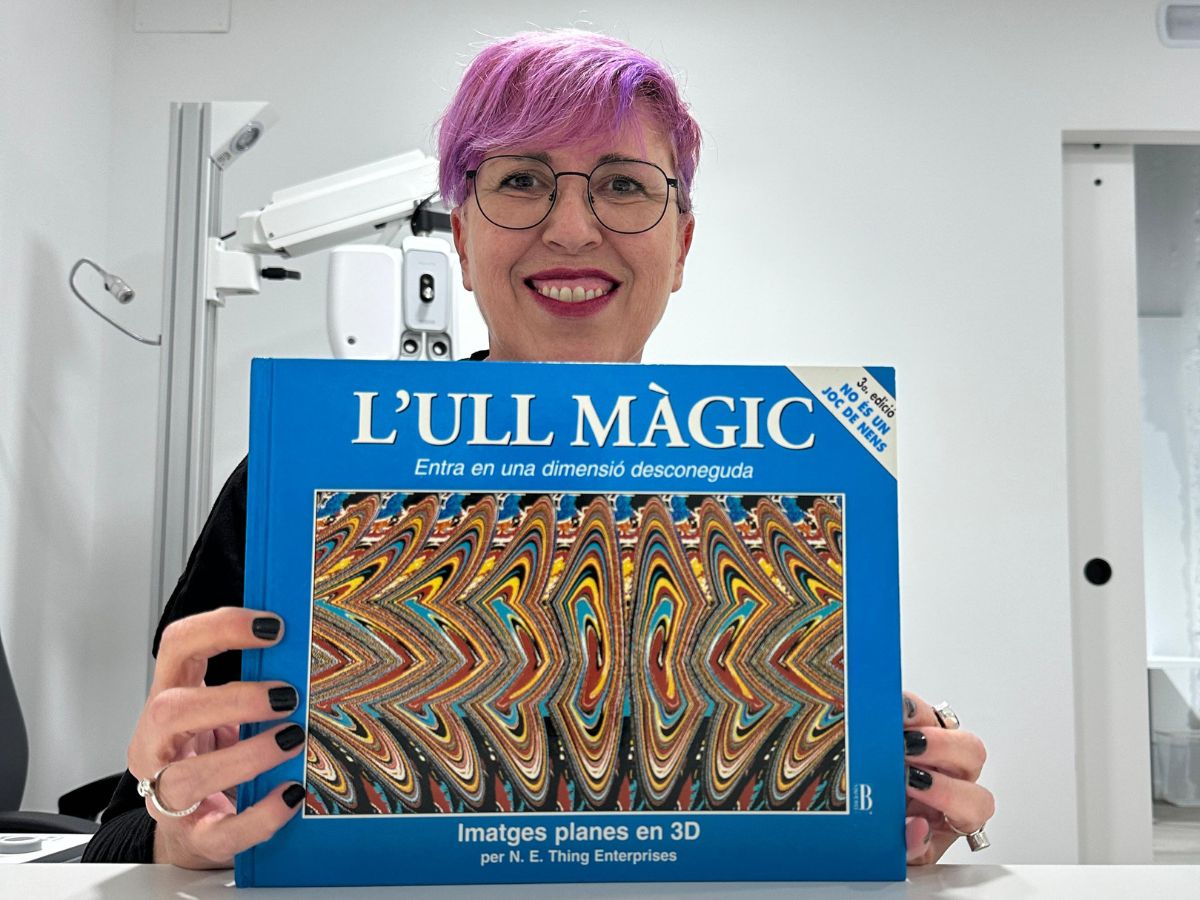
5.-Autostereogram books
Also known as “magic books” or “The Magic Eye”, they stimulate convergence, depth perception and binocular vision. A different and very appealing resource.
6.-Motor and coordination materials
From balls with unpredictable trajectories to target games, pegboards with tweezers or threading activities. Anything that involves moving the body in coordination with the eyes is useful to strengthen this visual–motor connection.
What if I don’t know which one to choose?
Each child has different visual needs. At Enfoca’t we carry out complete assessments to detect whether there are visual difficulties that may be interfering with learning, attention or development. This allows us to guide families with personalized recommendations.
These holidays, beyond traditional gifts, can be a great opportunity to give experiences that help children see (and understand) the world better. Playing can also be part of the treatment.